Lately I’ve been thinking about Plowy McPlowface. This past winter Arlington County’s Department of Environmental Services (DES) released the results of a contest to give names to all of it’s plows, and Plowy McPlowface is my favorite. They also incorporated these names into their snow activity map. Why does this matter? Two words – user delight.
Hierarchy of User Need
I like to think about user needs using Maslow’s hierarchy of need as an analogy:
- Delightful – it makes you smile
- Usable – it doesn’t frustrate you
- Valuable – it meets a need
- Functional – it works
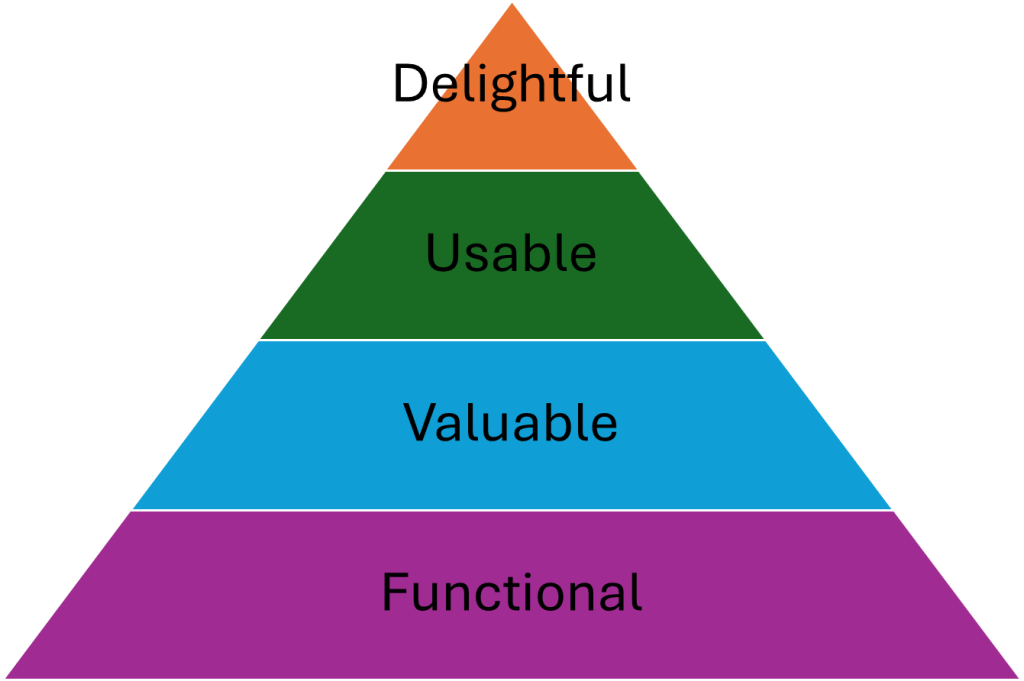
You might be able to get away with achieving functional, valuable, and usable; but the rewards of achieving delight are worth the effort. Normally snow removal is something you hope goes well as you hunker down during a storm. If it does, you barely think about it as you dig yourself out and things return to normal. If it goes poorly, people get so angry that politicians can loose elections.
This winter, however, I found myself delighted following along as Plowy McPlowface, Dwight D. Eisenplower, and Sleetwood Mac methodically cleared the roads.
User Delight Matters in Public Services
In the commercial sector, user delight is a matter of competitive necessity. If you fail to delight your users, you leave yourself vulnerable to a competitor who can. In the public sector, however, there is rarely a competitor, so why bother? Relationships matter. Your relationship with the community is the foundation for everything you do, and digital services are often people’s first impression. In a world where we’ve grown accustomed to seamless experiences from commercial services, the failure to meet those expectations makes it that much harder to build a positive relationship with the public. Alternatively, when residents have positive, even unexpectedly pleasant interactions with public services, it builds rapport and supports an environment where more challenging public policy issues can be addressed.
A Tale of Two Services
The addition of punny names to the snow plows completely changed my experience with snow removal. My kids and I had great fun trying to “catch” as many as we could looking out the windows. It made winter weather much more enjoyable. As a result, I have a much more positive feeling towards the folks at DES than I did last fall.
I had the opportunity to experience another County service recently that did not go so well. The new Circuit Tree Maintenance program recently visited my neighborhood. A few signs went up, then a few days later some trees had some white paint markings, then a few days later they were gone.
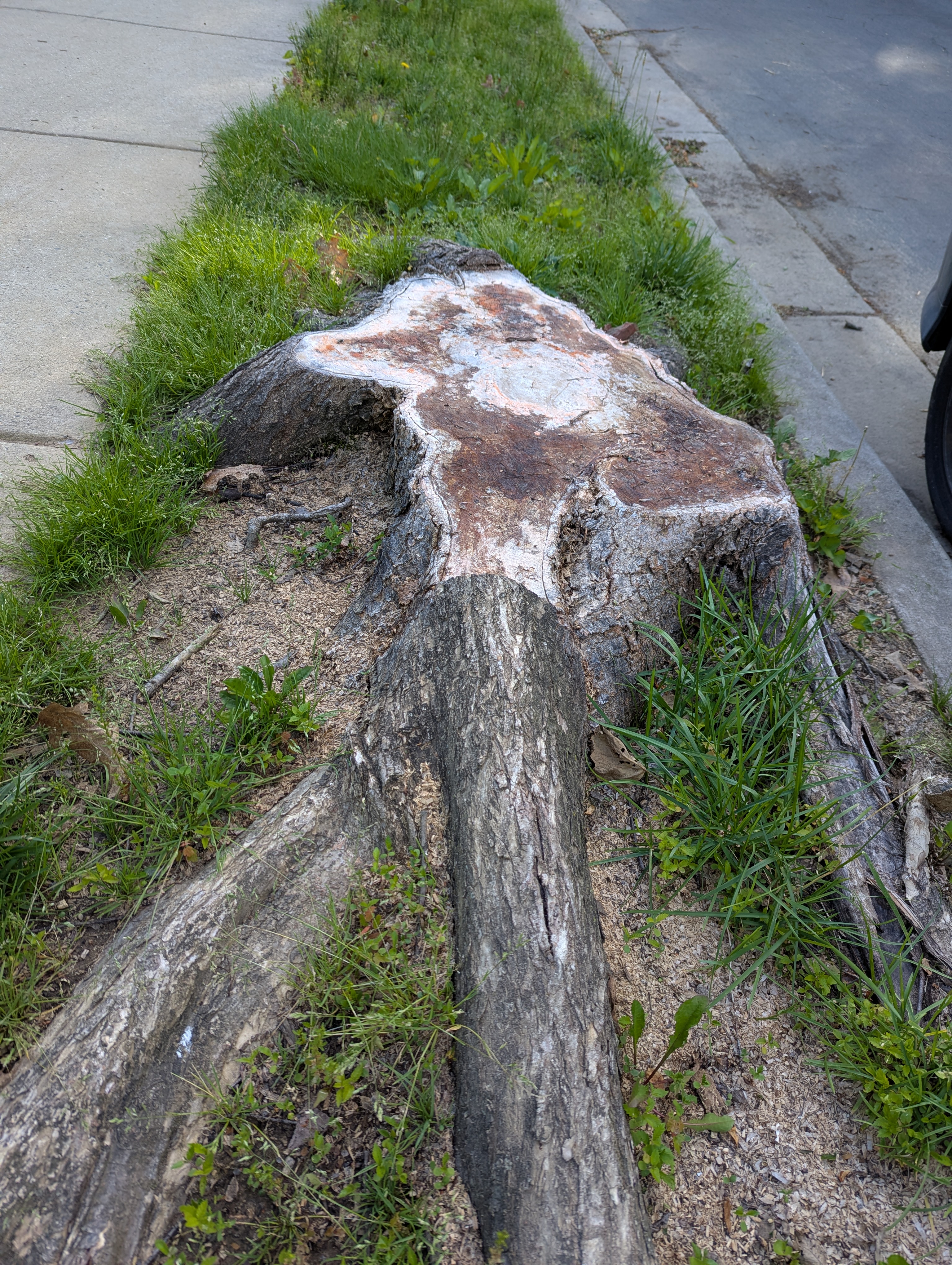
The neighborhood was upset. After a few inquiries an explanation from the arborist was shared with the neighborhood. The trees had split trunks and were unsafe. They may be replaced, but that was a different department. The complaining was quieted, but it left a negative feeling toward this new, and valuable program.
What could have been done differently? All of the information shared by the arborist was available BEFORE the trees came down. More proactive communication would have helped. Second, better integration of tree removal and tree replacement. From the user perspective, the service isn’t tree maintenance, it’s street trees! As I type nearly two months later, I still don’t know if or when new trees will be planted.
The Building Blocks of User Delight
Creating services that delight your users doesn’t happen by accident. To get started incorporate these practices into your service design and delivery:
User Personas
Delightful experiences anticipate user needs before they arise. In order to anticipate those needs, you have to empathize with your users. User Personas help anchor the team on what matters to your users.
User Journeys
Mapping your users’ journey through the service helps you visualize and sequence the key moments of your users’ experience. These moments are where you want to focus.
Definition of Done
A “Definition of Done” is shorthand for clear and explicit criteria, visible to the whole team, for what constitutes “done” before a service can be released to users. Incorporate delight into your definition of done (or definition of ready).
How much to invest
Obviously you can’t invest all of your resources into delighting users. Back to our Hierarchy of User Need you can think about each layer as proportional to your investment, with most of your effort going into delivering a service that is functional.
But instead of building something that is functional, and then moving up the to valuable and so on…
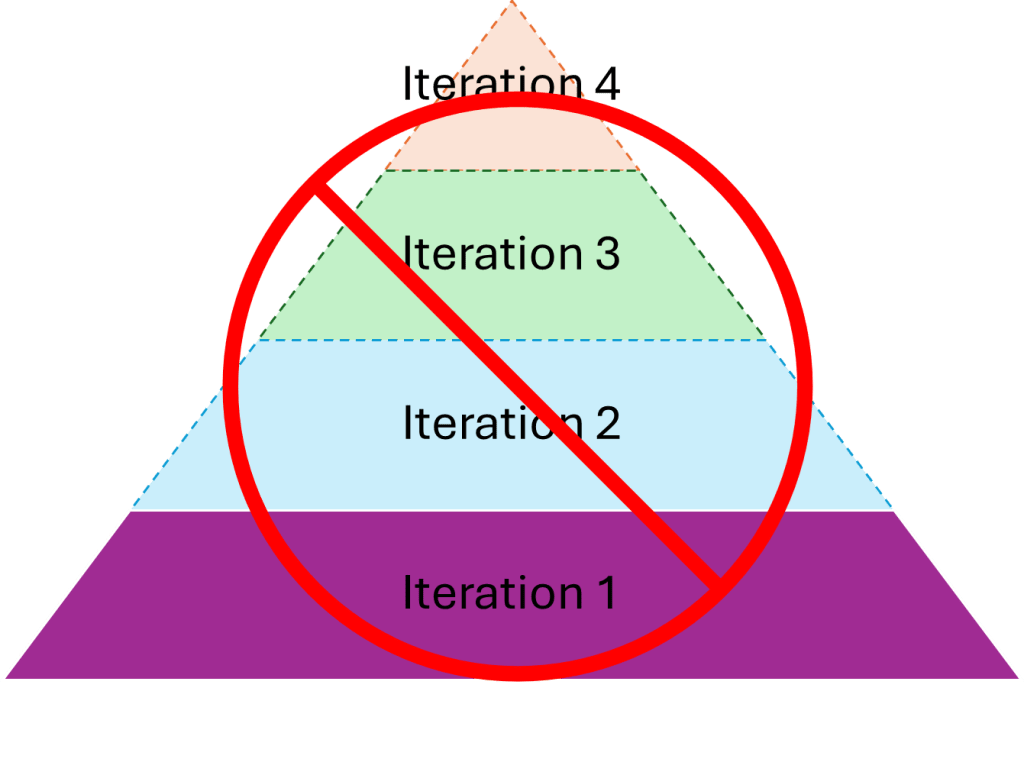
…invest in functional, valuable, usable, and delight with each iteration.
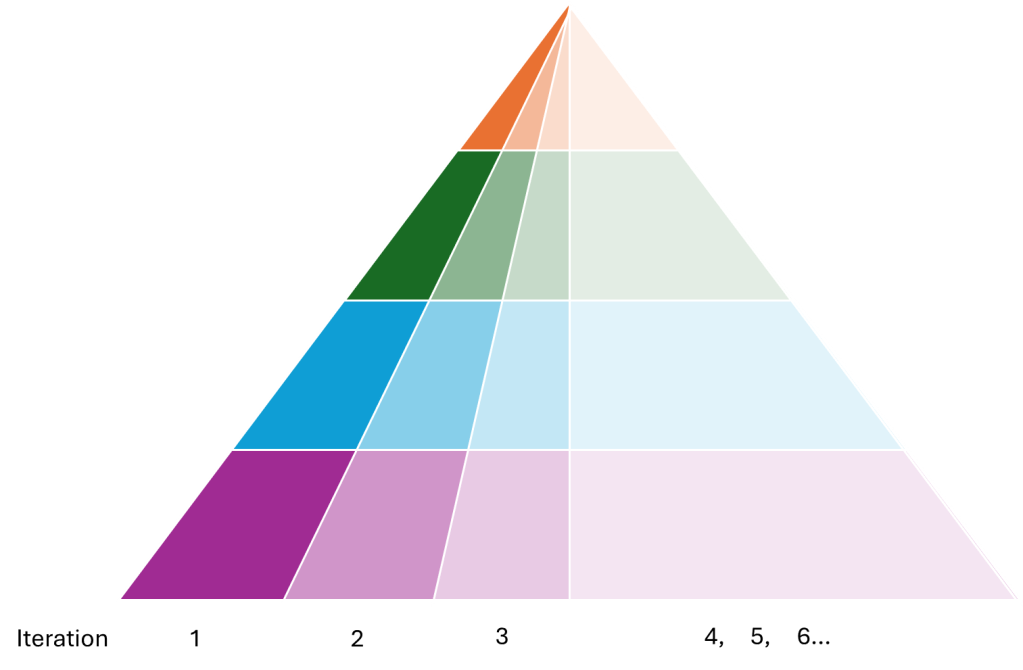
The snow activity map required multiple capabilities – GIS mapping layers, real time location data from the plows, and streaming data updates to a content management system to publish it all on the internet. Naming the plows probably wasn’t feasible until the these other services had gone through many iterations. If those prior versions hadn’t been valuable, usable, and delightful to their users, they may never have made it to entertaining me and my kids.
The Return on Delight
Creating a positive relationship with your customers is a valuable intangible return, but what about more practical considerations? Well designed services typically have reduced support costs and higher compliance freeing your team to focus on the next iteration rather than troubleshooting and enforcement creating a virtuous cycle that’s, well, delightful.
 Impulse Consulting